Delicious Mango Tapioca Pudding Recipe-Sweet Mango Sago
Mango Tapioca Pudding, also affectionately known as Mango Sago, is an absolute dream of a dessert, and today, we’re diving headfirst into creating this delightful treat. Imagin extracte the velvety smooth, subtly sweet texture of perfectly cooked tapioca pearls, interwoven with the luscious, sun-kissed sweetness of ripe mangoes. It’s no wonder this dish has captured hearts across continents; it’s a simple yet sophisticated symphony of flavors and textures. What makes Mango Tapioca Pudding so special? It’s that irresistible combination of cooling creaminess and tropical vibrancy, a taste of pure sunshine in every spoonful. Whether you’re seeking a light, refreshing end to a meal or a delightful snack to brighten your day, this Mango Sago recipe is sure to become a cherished favorite in your culinary repertoire. Get ready to create a dessert that’s both comforting and exotically delightful!
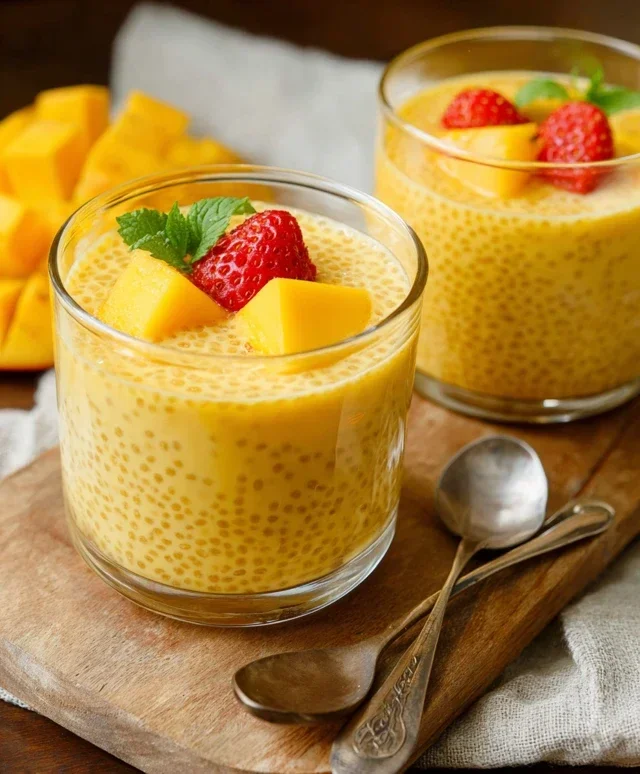
Mango Tapioca Pudding (Mango Sago)
There’s something incredibly comforting and deliciously exotic about a good mango tapioca pudding, often referred to as Mango Sago. It’s a dessert that bridges the gap between creamy, tropical indulgence and a light, refreshing finish. The beautiful interplay of sweet, ripe mango, chewy tapioca pearls, and rich coconut milk creates a symphony of textures and flavors that’s simply irresistible. This recipe is designed to be straightforward, allowing you to bring this delightful dessert to life in your own kitchen, perfect for a hot afternoon treat or a delightful ending to any meal.
The secret to a truly outstanding Mango Sago lies in the quality of your mangoes and the texture of your tapioca. We want those little pearls to be perfectly tender, not mushy or chalky, and the mangoes to be at their peak sweetness and fragrance. The addition of coconut milk lends a wonderful richness and depth that complements the mango beautifully.
Let’s get started on crafting this tropical delight. It’s a process that’s as enjoyable as the final product, and I’m excited to guide you through each step.
Ingredients:
Cooking Instructions
Step 1: Preparing the Tapioca Pearls
The first crucial step in making our Mango Sago is to get the tapioca pearls ready. In a large pot, bring the 8 cups of water to a rolling boil over high heat. Once the water is vigorously boiling, carefully add the 3/4 cup of small tapioca pearls. Stir them immediately to prevent them from clumping together at the bottom of the pot. Reduce the heat to medium-high, and cook the tapioca pearls for about 10-15 minutes, stirring occasionally. You’ll know they are ready when they become mostly translucent, with just a tiny white dot in the center. This is the perfect stage for them to absorb the creamy liquids later without becoming overcooked.
Step 2: Rinsing and Draining the Tapioca
After the tapioca pearls have cooked to the desired consistency, it’s time to rinse them. This step is important for removing any excess starch, which can make the pudding gummy. Drain the cooked tapioca in a fine-mesh sieve and rinse them thoroughly under cold running water. Continue rinsing until the water runs clear. This will also help to cool them down and prevent them from continuing to cook. Set the rinsed tapioca aside in a bowl.
Step 3: Creating the Creamy Base
Now, let’s build the luscious base for our pudding. In a separate saucepan, combine the 1 cup of milk, 3/4 cup of full-fat canned coconut milk, and 2 tablespoons of the honey (or your chosen sweetener). Place this mixture over medium heat and stir gently until it’s warm and the honey is fully dissolved. You don’t want to boil this mixture; just a gentle warming is all that’s needed to incorporate the flavors. This creamy base will be what our tapioca pearls soak up to create that wonderful pudding texture.
Step 4: Combining Tapioca and Creamy Base
Once the creamy base is warm and the sweetener is dissolved, it’s time to bring the tapioca and the liquid together. Add the rinsed and drained tapioca pearls into the saucepan with the warm milk and coconut milk mixture. Stir everything gently to combine. Let this mixture simmer on low heat for about 5-7 minutes, stirring frequently. This allows the tapioca pearls to absorb some of the liquid and plump up beautifully, creating the characteristic pudding texture. Be patient here; the longer it simmers gently, the more infused the tapioca will become.
Step 5: Preparing the Mangoes and Final Assembly
While the tapioca is gently simmering, prepare your mangoes. Peel the 3 medium-sized mangoes. Cut the flesh away from the pit and dice about half of the mangoes into small, bite-sized pieces. The other half of the mangoes will be pureed to create a vibrant mango sauce. Place the remaining mango halves into a blender or food processor with the remaining 1 1/2 tablespoons of honey and blend until you have a smooth, luscious puree. Once the tapioca mixture has thickened slightly and the pearls are tender, remove it from the heat. Gently fold in the diced mango pieces.
Step 6: Chilling and Serving
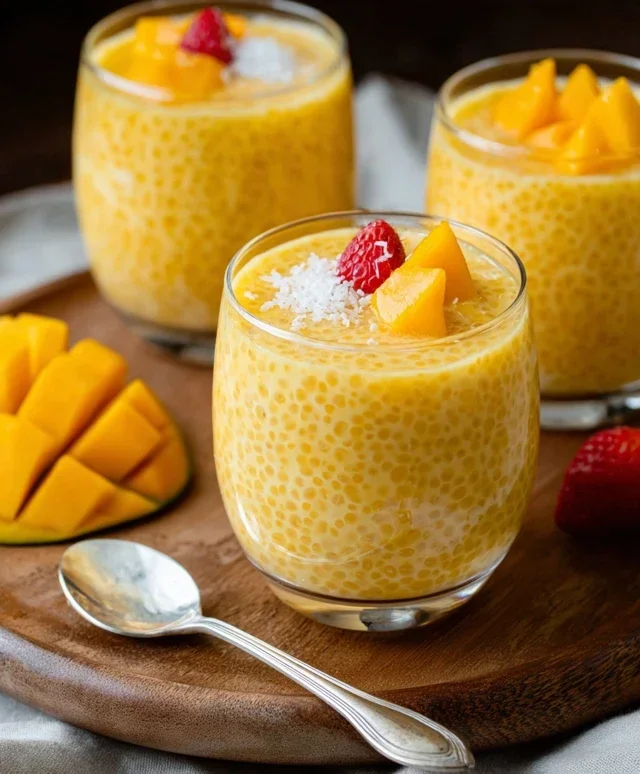
Transfer the Mango Tapioca Pudding into serving bowls or a larger serving dish. Cover it with plastic wrap, ensuring the wrap touches the surface of the pudding to prevent a skin from forming. Refrigerate for at least 2-3 hours, or until thoroughly chilled. This chilling time is essential for the flavors to meld and the pudding to set to its perfect consistency. When ready to serve, drizzle each bowl generously with the mango puree you made. Garnish with the sliced strawberries for a burst of color and a hint of tartness that perfectly complements the sweet mango and creamy pudding. Enjoy this delightful tropical treat!
Conclusion:
There you have it! My simple and delicious Mango Tapioca Pudding, also known as Mango Sago, is more than just a dessert; it’s a vibrant taste of sunshine and tropical bliss. This recipe truly shines with its perfect balance of creamy coconut milk, chewy tapioca pearls, and the sweet, fragrant burst of fresh mango. It’s wonderfully refreshing, making it an ideal treat for a warm afternoon, a light ending to a rich meal, or even a delightful breakfast option if you’re feeling adventurous!
For serving, I love to garnish my Mango Sago with extra diced mango, a sprinkle of toasted shredded coconut for added crunch, and sometimes even a few fresh mint leaves for a hint of coolness. You can also get creative with variations! Try adding a splash of lime juice for a zesty kick, or a touch of cardamom for an aromatic twist. For those who enjoy a bit more texture, feel free to add some chopped toasted nuts like cashews or almonds.
I genuinely encourage you to give this Mango Tapioca Pudding recipe a try. It’s surprisingly easy to make, and the results are incredibly rewarding. It’s a versatile dessert that’s sure to impress your friends and family, or simply bring a smile to your own face. Enjoy this delightful taste of the tropics!
Frequently Asked Questions about Mango Tapioca Pudding:
Q: Can I use frozen mango instead of fresh?
A: Absolutely! Frozen mango works perfectly. Thaw it completely before dicing and incorporating it into the pudding. The flavor will be just as wonderful, and it can be a convenient option.
Q: My tapioca pearls are sticking together. What did I do wrong?
A: This often happens if the pearls aren’t cooked properly or if they sit too long before being mixed with liquid. Make sure to cook them according to package directions, stirring frequently. Rinsing them under cool water after cooking can also help prevent clumping.
Mango Tapioca Pudding (Mango Sago)
A creamy and refreshing dessert featuring sweet mangoes and chewy tapioca pearls, enriched with coconut milk.
Ingredients
-
8 cups (1.9L) water
-
3/4 cup (155g) small tapioca pearls
-
1 cup (235ml) whole or 2% milk
-
3/4 cup (175ml) full-fat canned coconut milk
-
3 1/2 tablespoons honey (divided)
-
3 medium-sized mangoes
-
1 cup sliced strawberries
Instructions
-
Step 1
In a large pot, bring 8 cups of water to a boil. Add the tapioca pearls and cook according to package directions, stirring occasionally, until translucent. This typically takes about 15-20 minutes. Drain the tapioca pearls and rinse them under cold water to remove excess starch. -
Step 2
While the tapioca is cooking, prepare the mangoes. Peel and dice the mangoes. Reserve about half of the diced mango for garnish. -
Step 3
In a separate medium saucepan, combine the milk, coconut milk, and 2 tablespoons of honey. Heat over medium heat, stirring, until warm and the honey is dissolved. Do not boil. -
Step 4
Add the cooked and drained tapioca pearls to the warm milk mixture. Stir well to combine. -
Step 5
Gently fold in the diced mangoes (reserving some for garnish). Stir in the remaining 1 1/2 tablespoons of honey, or to taste. -
Step 6
Pour the pudding into serving bowls or a large dish. Cover and refrigerate for at least 1-2 hours, or until chilled and set. Garnish with the reserved diced mango and sliced strawberries before serving.
Important Information
Nutrition Facts (Per Serving)
It is important to consider this information as approximate and not to use it as definitive health advice.
Allergy Information
Please check ingredients for potential allergens and consult a health professional if in doubt.